Visual workflow
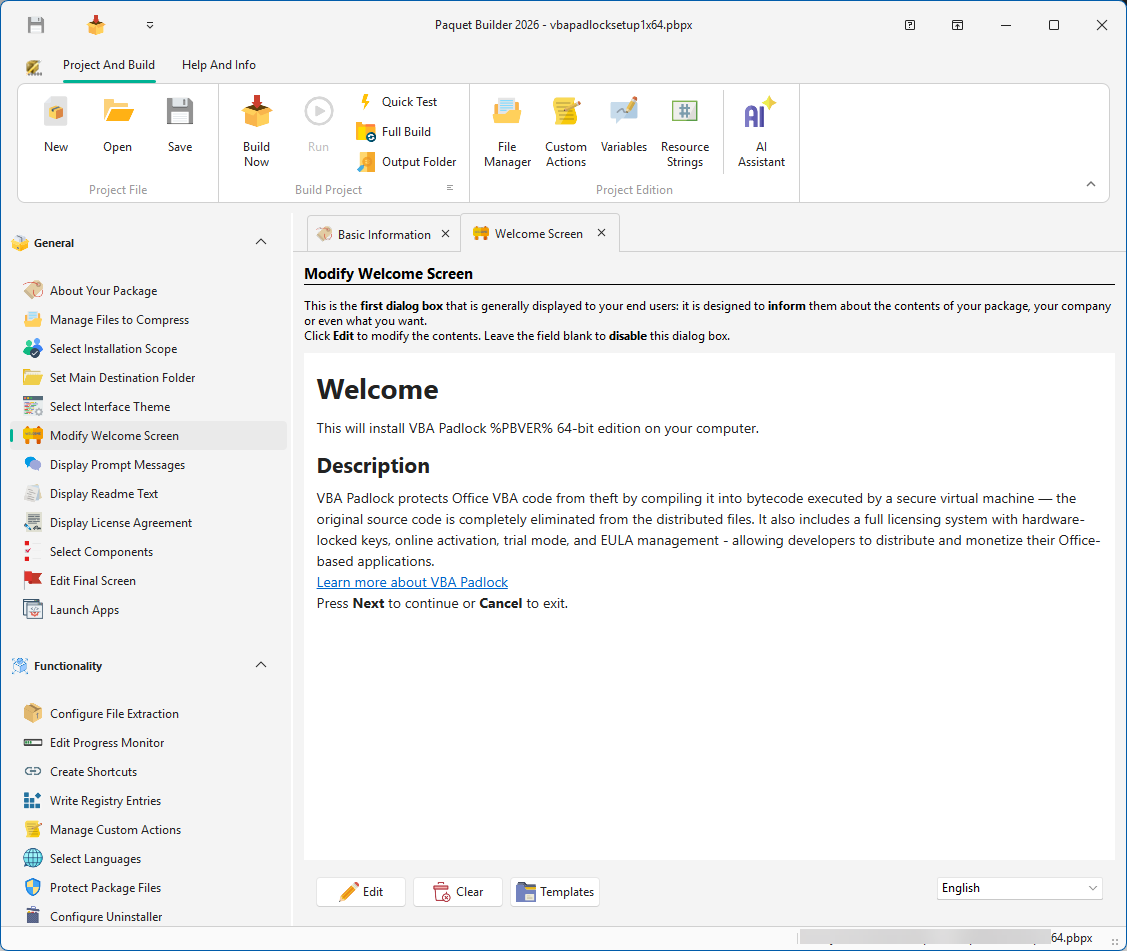
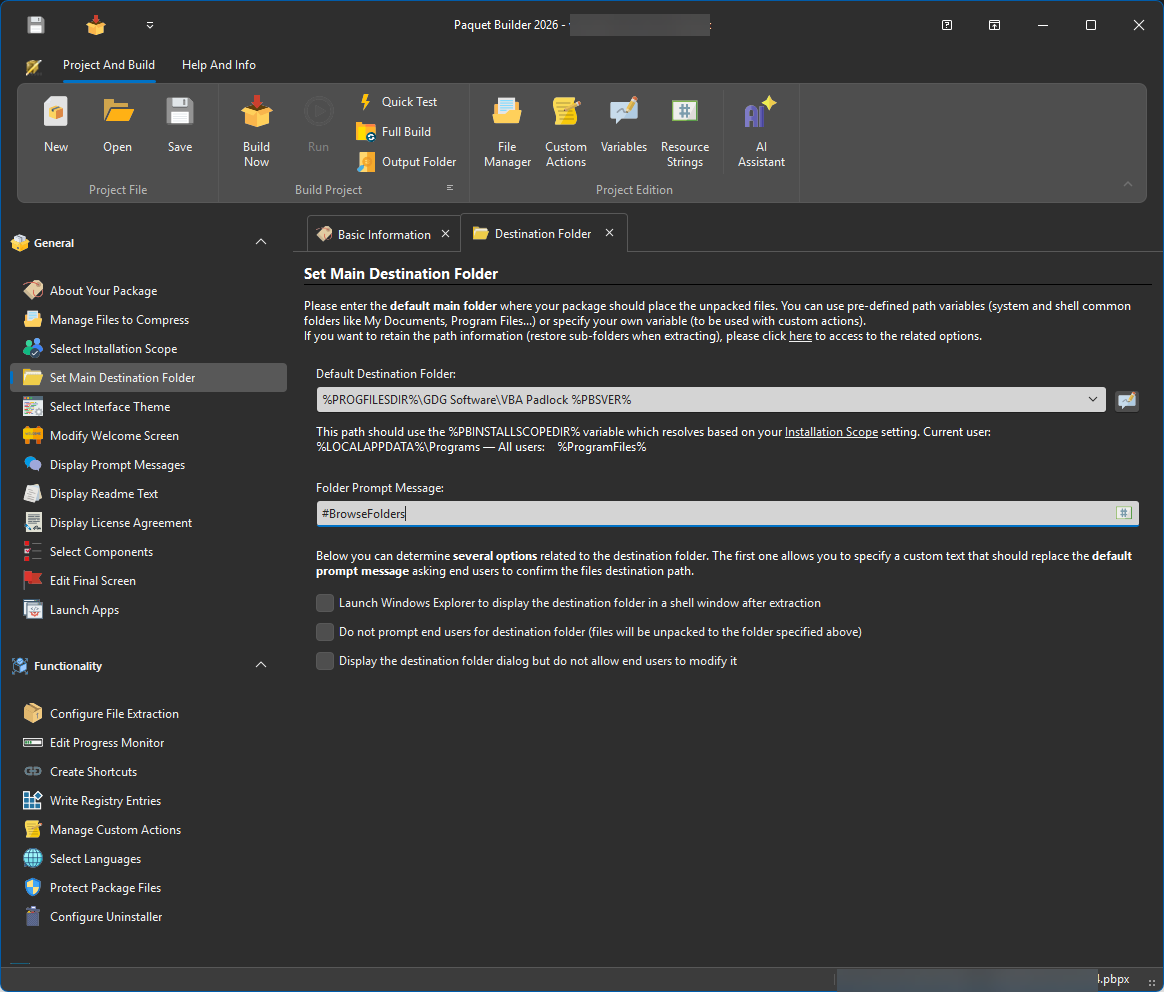
Create packages without scripting. Most tasks are configured through dedicated editors, dialogs, and checkboxes.
Paquet Builder sits between a self-extracting 7-Zip builder and a full Windows package authoring environment. It can be as simple as “add files and build an EXE” or as detailed as “design a multilingual installer with signing, custom dialogs, registry work, and scripted runtime behavior.”
Visual workflow
Create packages without scripting. Most tasks are configured through dedicated editors, dialogs, and checkboxes.
Installer-grade behavior
Add welcome screens, readme pages, license agreements, shortcuts, uninstallers, and post-install execution.
Advanced runtime logic
Use variables, conditions, custom actions, registry operations, XML editing, file checks, and user prompts.
Modern delivery options
Sign packages, optimize compression, target x86, x64, or ARM64, and automate builds through CLI, directives, AI, or MCP.
Paquet Builder can be used to:
.exe.Files and components
Organize files into components, define destination paths, and let end users select optional content.
Compression and output
Build compact archives with 7-Zip compression methods such as LZMA2, BCJ2, and PPMD, including multi-volume output.
Security and trust
Protect output with passwords, integrity checks, Authenticode signatures, or Azure Artifact Signing.
AI and automation
Configure projects with the built-in AI Assistant or manage them headlessly through the MCP Server.
You can create a working package in minutes: start a new project, add files, choose an output path, and click Build Now. After that, you can gradually enable advanced options such as custom actions, digital signatures, environment defaults, or automated build flows.